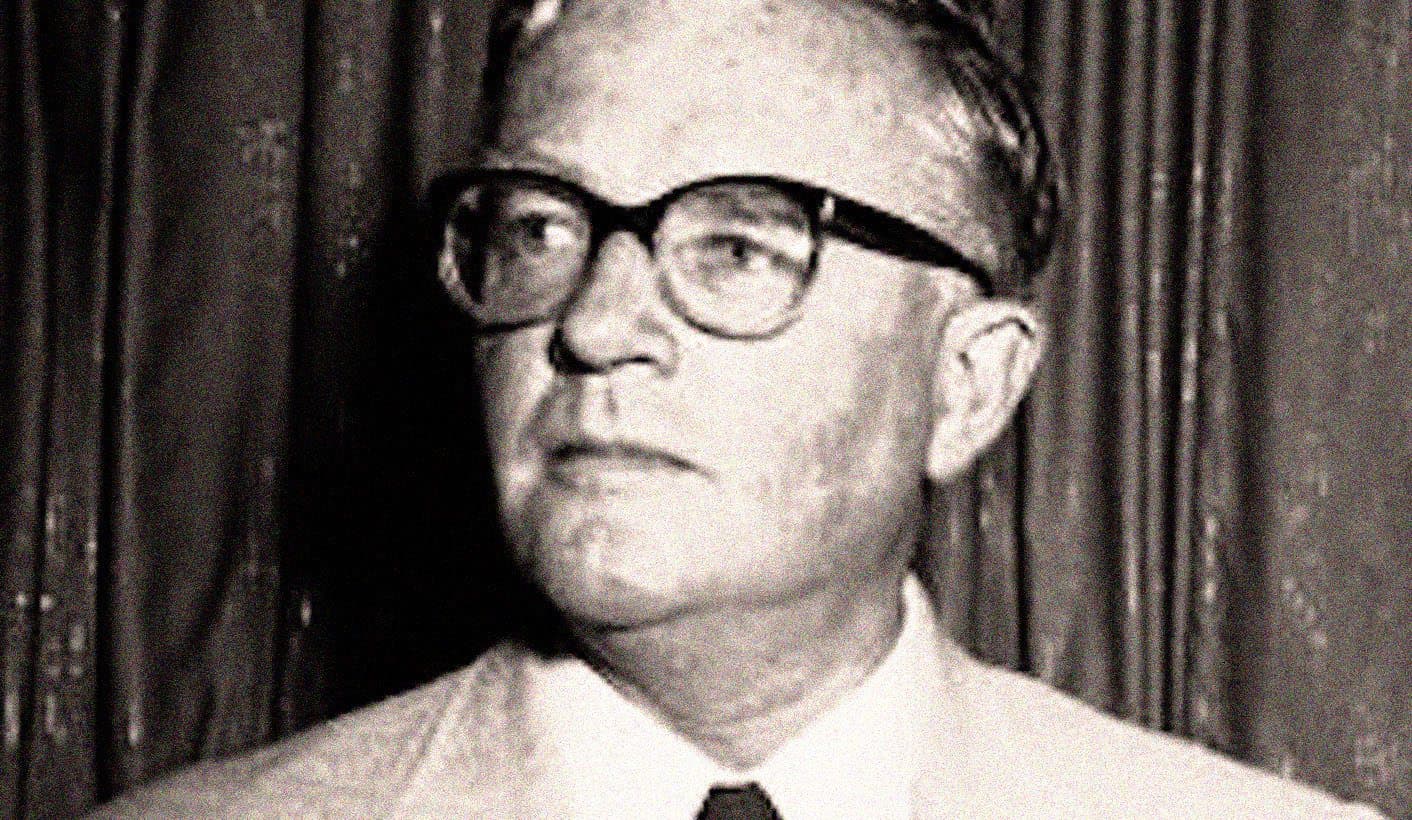
Bram Fischer
1908 - 1975
An Afrikaner aristocrat who chose justice over privilege and became one of apartheid's most celebrated prisoners.
3
Candles
3
Tributes
0
Media
2
Family
An Afrikaner aristocrat who chose justice over privilege and became one of apartheid's most celebrated prisoners.
— A message from the family
Biography
Abram Louis Fischer, known as Bram, was born on 23 April 1908 in Bloemfontein, into one of the most prominent Afrikaner families in South Africa. His father was a judge president of the Orange Free State, and his grandfather was a prime minister of the Orange River Colony. By every measure of South African society, Bram Fischer was born to rule. Instead, he chose to fight.
Fischer studied at the University of Oxford as a Rhodes Scholar and later became a leading advocate at the Johannesburg Bar. In the 1940s, he joined the Communist Party of South Africa and the ANC, becoming one of the few Afrikaners to openly oppose the National Party's apartheid policies. He used his legal skills to defend anti-apartheid activists, most famously serving as lead counsel in the Rivonia Trial of 1964, where he defended Nelson Mandela, Walter Sisulu, and their comrades.
After the Rivonia Trial, Fischer continued his underground political work. In 1964, he was himself arrested and charged with conspiracy to overthrow the government. During his trial, he made a remarkable statement from the dock, acknowledging his membership in the banned Communist Party and explaining that he had acted out of love for his country and his belief in a non-racial South Africa. He was sentenced to life imprisonment.
While in prison, Fischer's health deteriorated. He contracted cancer and was denied adequate medical treatment by the authorities. In 1974, as his condition worsened, international pressure led to his release on humanitarian grounds. He spent his final months at his brother's home in Bloemfontein, where he died on 8 May 1975.
Bram Fischer was buried in the family cemetery in Bloemfontein, but the authorities refused to allow any political figures to attend the funeral. Nelson Mandela, then on Robben Island, wrote a tribute that was smuggled out and read at a memorial service in London. Fischer's legacy is one of the most powerful in South African history — a man who had everything and gave it all up for justice. The Bram Fischer Building at the University of the Witwatersrand and the Bram Fischer Memorial Lecture honour a man who proved that conscience is stronger than privilege.
3
Contributions
0
Media Files
3
Digital Candles
2
Family Members
Life Timeline
7Born in Bloemfontein
Born into one of the most prominent Afrikaner families in South Africa.
Rhodes Scholar at Oxford
Studied at Oxford University as a Rhodes Scholar.
Joined Communist Party
Became a member of the Communist Party of South Africa.
Lead Counsel in Rivonia Trial
Defended Mandela, Sisulu, and their comrades in the historic trial.
Sentenced to Life Imprisonment
Convicted of conspiracy to overthrow the government.
Released on Humanitarian Grounds
Released from prison due to advanced cancer and international pressure.
Passed away at age 67
Died on 8 May 1975 in Bloemfontein.